
BY JEFF CIOLETTI
Creating a headline‑grabbing cream liqueur
Creating a headline‑grabbing cream liqueur has become a bit of an art form in itself these days, with craft spirits producers taking some really big swings in the flavor department. But behind that “sky’s‑the‑limit” art is a science that can be far less forgiving, especially when it comes to stability and consistency from batch to batch.
Mind the ABV
One of the keys to ensuring shelf stability is the ABV. Generally, the absolute floor for a cream liqueur’s alcohol content should be 12%. “Cream liqueurs will never need to be refrigerated as long as they’re over 12% alcohol,” says Luke Gambaro, director of beverage sales at dairy ingredients producer Galloway Company. “The alcohol at that level is enough to prevent any bacteria growth.”
Mind the Emulsion
Alcohol content is also one of the two major factors that could break a cream liqueur’s emulsion. If you’re blending in an alcohol base, ensure that the base spirit has an ABV of no more than 50% (100 proof). Anything stronger than that risks breaking the emulsion.
The other key factor is pH. Dairy typically has a neutral pH of around 7. Anything too low (acidic) or too high (alkaline) could break the emulsion.
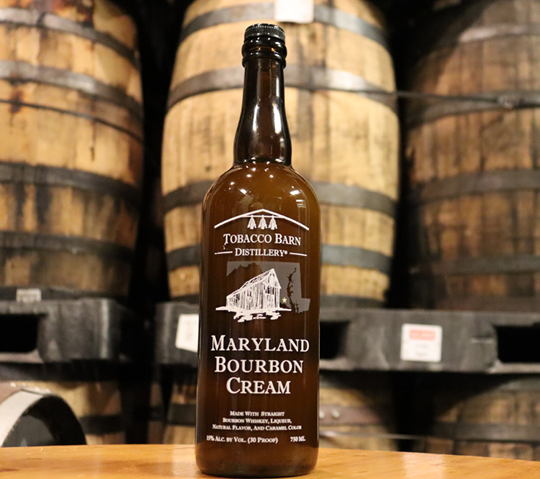
“It’s all about the pH,” says Scott Sanders, co‑founder of Tobacco Barn Distillery in Hollywood, Maryland. Tobacco Barn, a farm distillery known for its whiskeys, produces Maryland Bourbon Cream with some of its signature spirit, combined with ultra‑high‑temperature (UHT) dairy supplied by flavor house Mother Murphy’s.
“You have to nurture it,” Sanders says. “You have to make sure that the way you’re putting the bourbon in, you’re not breaking [the emulsion] apart. That is a very careful process, a painfully exhausting process…but we’ve been making it for over two and a half years, and it’s come out beautifully every time.”
Flavors Require Extra Care
Things get trickier when you’re adding a variety of flavors beyond the dairy (or non‑dairy alternative) and spirit. “[A lot of] flavors are really harmful in their pure form; they’re very acidic, typically,” says Gambaro.
High‑proof alcohol will typically be used to extract those flavors—like orange, through maceration, for instance. “Alcohol is the main carrier [of the flavor],” Gambaro explains. So, in that form, it could be 85% alcohol and 3 pH—acidic. All you have to do is use something like food‑safe sodium hydroxide that adjusts the pH of the flavor back to neutral. And at that point, you have a neutral pH flavor and a neutral pH cream, and you can combine those, and they get along just fine.
Coffee tends to be one of the least cooperative ingredients to combine—coffee extracts, in particular.
“But it’s definitely doable,” Gambaro says. “Coffee extracts tend to lend the best real coffee taste as opposed to coffee flavor. But it just takes a little more babying and time to adjust the pH of coffee because it tends to want to stay low and drop. So you just want to adjust, wait a little bit longer, and then check it again before blending with the cream.”
The Bard Distillery in Graham, Kentucky, has three different cream liqueurs in its portfolio, each bringing a radically different flavor experience to the category: Muhlenberg Salted Caramel Cream Liqueur, Muhlenberg Blackberry Bourbon Cream Liqueur, and Muhlenberg Orange Cream Liqueur—the latter of which sports the flavor of a classic dreamsicle.
“The secret to all of them is mix, mix, mix,” reveals The Bard co‑founder, CEO, and head distiller Tom Bard. “It wants to separate, it wants to go back to what it originally was, and you’re always fighting that. The thing you’re always dreading is having separation or having solidification in the bottle.”
Like Tobacco Barn, The Bard partners with flavor supplier Mother Murphy’s, which supplies the cream with base alcohol in it.
“We told [Mother Murphy’s] what flavor we were going for…they sent us a list of what [ingredients] should go in…and we used it as our baseline, and started adding different amounts of those ingredients in different batches in a five‑gallon bucket,” he explains. “With a liqueur, you’re mainly doing a blending, and it seems to scale fairly linearly. Once you figure out what tastes good in a bucket, you multiply it and scale it from there.”
The Bard also typically adds a bit of its own young bourbon to enhance the flavor and character.
“Once we started to do more than one cream liqueur, we started to play around with other ingredients that we had in stock,” Bard recalls. “You create your own recipe, which is based on a recipe you found, like you do at home, then just dial it in and say, ‘yeah, that’s what we’re going for.’”
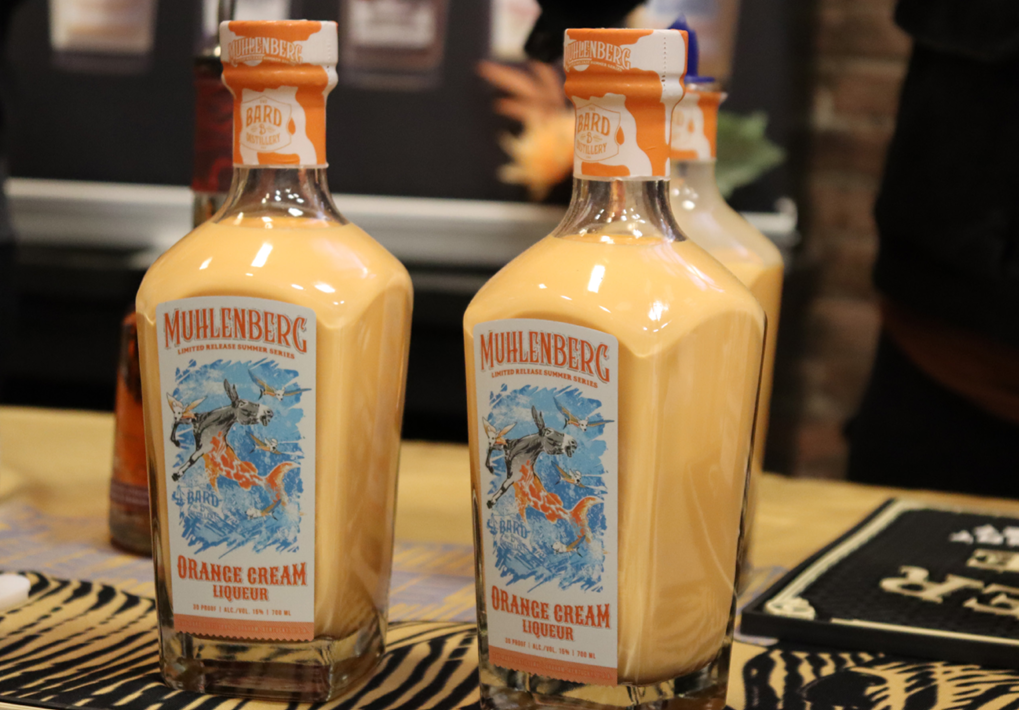
The cream base arrives at the distillery at 34 proof. Once Bard and his team add the other ingredients, including the bourbon, the proof reduces to below 30. “That’s the universal sweet spot,” Bard says.
Of the three liqueurs he produces, Bard says Salted Caramel seems to be the easiest. Blackberry Bourbon Cream tends to be the most finicky from batch to batch, as blackberry can be a flavor that’s really tough to replicate. And he’s looking to emulate the flavor of the distillery’s Blackberry Mühl Whiskey.
“There are lots of [blackberry whiskeys] out there, but the sad thing is most of them don’t taste like blackberry,” Bard argues, noting that they can often end up having more of a grape flavor. “[People who try ours] say ours blows theirs out of the water. [Blackberry Bourbon Cream] is a little more difficult because it’s a very specific flavor profile. We wanted it to be a nice, dessert, cocktail base, but we really wanted it to taste like blackberry.”
One key lesson Bard has learned from experience in this category is that some ingredients may absorb other components of the recipe more than one might expect. Coloring is a prime example. One liqueur might require a certain amount of coloring—like caramel color, for instance—but another might need a whole lot more or less. And, when it comes to natural flavors, they all behave very differently from one another.
Talk About the Weather
Beyond pH, alcohol content, and ingredient‑related idiosyncrasies, there’s another element that’s less of a concern, but still important to keep an eye on: heat.
Ingredients houses like Galloway keep extreme heat in mind when they formulate. “The creams are designed to survive in a variety of temperatures because we know that customers are located in Florida and customers are located in Texas, and you can’t control necessarily how a distributor’s going to treat your products,” Gambaro notes. “But of course, anything at high enough heat for a long time is going to feel some pain from that.”
Variations in the local weather could also be an asset, particularly if you’re adding whiskey or another brown spirit to the formula. The barrel‑to‑barrel differences in those spirits can inform the final cream liqueur.
“Our bourbon is one of the reasons our cream liqueur tastes so good,” Sanders says. “Because of the climate around our area, the Chesapeake, it gets very humid in the summer, and our proof goes down over time. But we embrace the variables in the weather, our open atmosphere ferment, and changes from season to season.”
Stay Ahead of the Trends
Whatever the season, expect to see a lot more experimentation across the cream liqueurs segment. There likely will be a broadening beyond neutral and whiskey‑enhanced alcohol bases. Gambaro points to the growing embrace of agave spirits as a component of these types of products.
As far as flavors go, nostalgia seems to be a significant innovation driver. Bard’s Muhlenberg Orange Cream Liqueur very much plays within that space, as does one of the more prominent creations of the past few years, the waffles‑and‑syrup‑centric Eggo Brunch in a Jar from Sugarlands Distilling Co. in Gatlinburg, Tennessee. Similarly, flavors that suggest the cereal milk consumers remember from the bottoms of their bowls during the cartoon‑fueled Saturday mornings of their youth could be finding their way into more liqueurs.
And don’t sleep on non‑dairy cream liqueurs, using any of the dairy‑free milks with which you might enhance your coffee at Starbucks. A prime example is Oatrageous, a line of oat‑milk‑based liqueurs, available in bourbon cream, coconut, and espresso varieties.
“In cream liqueurs,” Gambaro says, “innovation is king.”